

Ruby on Rails
Build web applications in Ruby with convention over configuration
Build Python web applications with integrated data models, templates and administration tools.
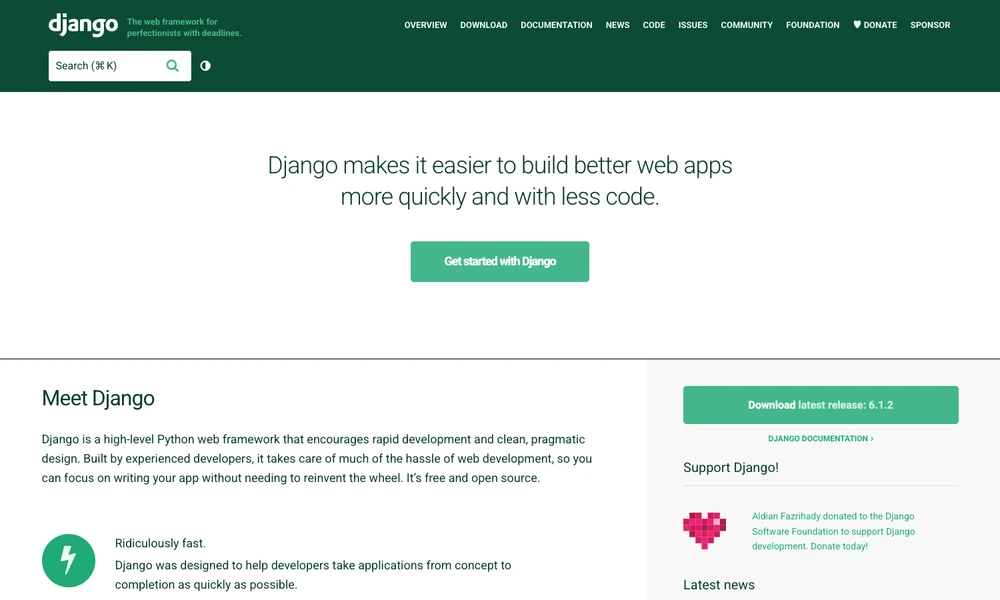
Django builds Python web applications around data models, request handling, and page templates. Describe records and relationships as Python models, use the database API to query them, and apply migrations when the structure changes. URL rules connect incoming requests with the views producing a response.
Registering a model supplies an administration interface where authorized users can add or revise records. Templates control how those records appear on the public pages, with shared layouts reused across views. The open-source framework provides those pieces together, while allowing alternatives for components such as data access or rendering. Developers use the structure to build the application's own behavior and management workflows.
Tried it? Share a useful thought or ask a question.
Good conversations start with a hello.
Sign in to commentBuild web applications in Ruby with convention over configuration
Build Node.js web applications and APIs with routing and middleware
Build web apps and APIs with C# and .NET
Build interactive machine learning interfaces with Python
Build a customizable rich-text editor inside your own application.
Build SaaS dashboards with ready-made React components