

Precision Neuroscience
Brain-surface interfaces for restoring digital control and communication
Implantable brain-computer interfaces for device control and communication
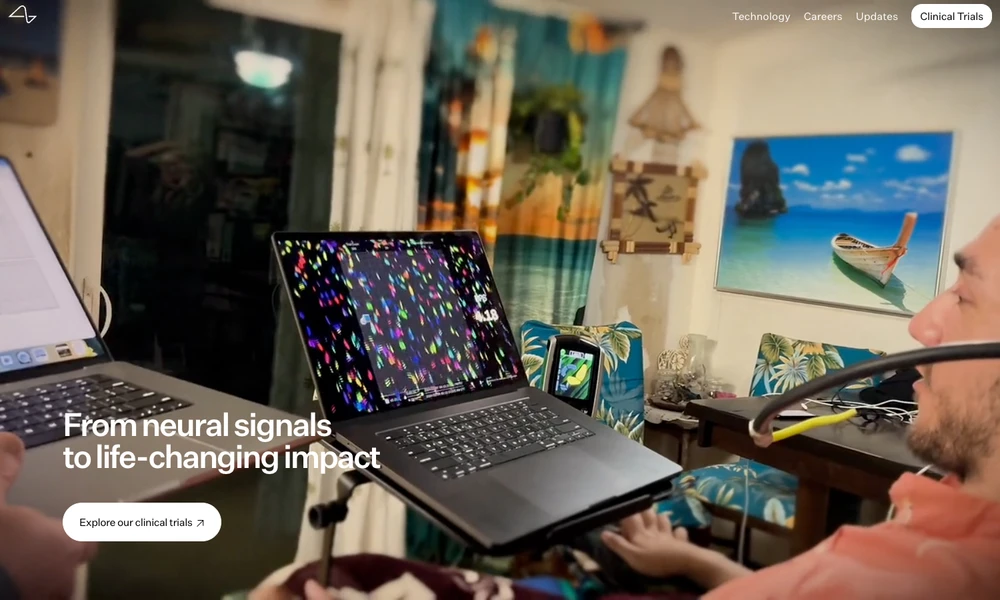
Neuralink develops implantable brain-computer interfaces intended to help people with paralysis interact with digital devices. Its N1 implant records neural activity through thin electrode threads and sends signals wirelessly to software that interprets movement intentions. A surgical robot places the threads, while an external charger powers the implant without a wired connection.
In clinical studies, participants train the system by imagining hand movements, then use a computer cursor for activities such as browsing, writing, and gaming. Neuralink is also investigating control of assistive devices and communication tools for people with severe speech impairment. Access is limited to clinical research, and the devices have not received regulatory approval for commercial use.
Tried it? Share a useful thought or ask a question.
Good conversations start with a hello.
Sign in to commentBrain-surface interfaces for restoring digital control and communication
Implantable brain-computer interfaces for restoring communication
A brain-computer interface implanted through a blood vessel
Speech recognition designed for people with non-standard speech
Customizable symbol-based communication for people who cannot rely on speech
Live captions for in-person conversations and video meetings